

On a crisp February morning in Vaughan, Ontario, Prime Minister Mark Carney stood before a backdrop of industrial machinery to unveil a “new era” for the Canadian economy.
It was a quintessential Liberal performance: grand promises, massive taxpayer commitments, and a thick layer of optimistic jargon. Carney’s message was clear: Canada must stop being a “branch plant” of the United States and become a “sovereign” leader in the global electric vehicle (EV) race.
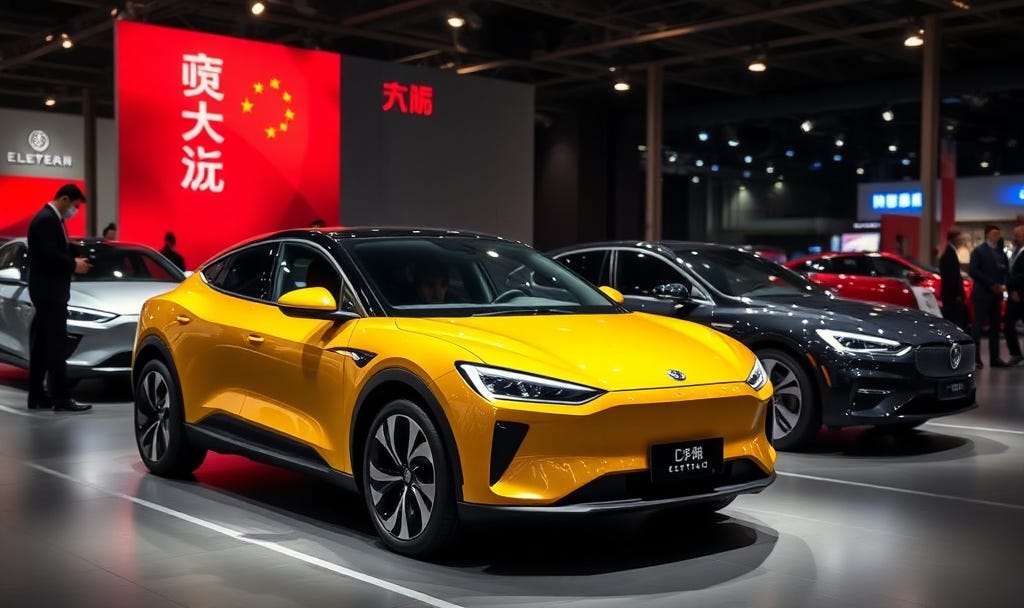
But as we peel back the layers of this “National Automotive Strategy,” the reality looks less like a sovereign triumph and more like a desperate scramble to fix the damage caused by years of Liberal mismanagement and shifting trade winds.
Is this a genuine strategy for growth, or is it a multi-billion-dollar taxpayer-funded bridge to nowhere?
The End of the Mandate: The Birth of the “Sovereign Path”
The most surprising part of Carney’s announcement was the sudden execution of the Electric Vehicle Availability Standard (EVAS). For years, the Liberals preached that a hard sales mandate was the only way to save the planet. Now, facing a cooling market and angry consumers, Carney has scrapped the mandate in favour of what he calls a “sovereign path” for greenhouse gas (GHG) emissions.
Under these new rules, the government is “more than doubling” the stringency of GHG tailpipe standards by 2035. The goal? To force an EV adoption rate of 75% by 2035 and 90% by 2040. Carney claims this “technology-neutral” approach gives manufacturers the flexibility to meet consumer preferences in the near term while still driving toward a zero-emission future.
One has to wonder: if the market is ready for 90% adoption, why does the government need to spend $2.3 billion in taxpayer-funded rebates to make it happen?
The new “EV Affordability Program” will hand out up to $5,000 for battery electric vehicles and $2,500 for plug-in hybrids. In a classic display of “picking winners,” Carney has waived the $50,000 price cap for vehicles that are “Canadian-made,” while maintaining it for everyone else.
The China Swap: Canola Seeds for Rolling Computers
While Carney spoke of “independence,” the elephant in the room was his new best friend: Beijing.
The Prime Minister has officially greenlit a “strategic partnership” with China that allows up to 49,000 Chinese-manufactured EVs into our market every year. To facilitate this, the previous 100% “blockade” tariff has been slashed to a mere 6.1%.
What did we get in exchange for opening the door to subsidized competition?
A “peace deal” on agricultural products. China agreed to drop its punitive tariffs on Canadian canola from roughly 85%–100% down to 15% by March 2026. It’s a cynical trade-off: we surrender our high-tech automotive future to secure a temporary win for farmers whom Beijing was bullying in the first place.
As one analyst noted, these 49,000 units represent only about 3% of our market, but it gives Chinese brands a “foot in the door”. Carney is betting that this towhold will eventually blossom into Chinese assembly plants on Canadian soil within the next decade.
But as we will explore in later installments of this series, that “foot in the door” comes with microphones, cameras, and direct links to the Chinese Communist Party.
Throwing Cash at the Problem: The $3 Billion Shield
Knowing that the domestic industry is terrified of this new competition, Carney is doing what the Liberals do best: opening the chequebook.
The strategy allocates $3 billion from the Strategic Response Fund and another $100 million for regional tariff relief to help manufacturers “diversify”.
The centerpiece of this corporate welfare package is the “Productivity Super-Deduction”. This allows auto manufacturers to write off a massive share of their investment costs in the first year. The government boasts that this gives Canada the lowest marginal effective tax rate on investment in the G7—a full 4.5 percentage points lower than the U.S..
While tax relief is always welcome, we must ask: why is it only available when the government decides you are building the “right” kind of car?
Instead of a broad-based tax cut for all Canadian businesses, we have a hyper-targeted bribe designed to keep legacy manufacturers from fleeing the country as the Liberals invite their Chinese rivals to lunch.
The European Warning: A “Cautionary Tale”
If you want to see where this path leads, look across the Atlantic to Italy.
In 2025, Italian auto production plummeted by 27%. Legacy manufacturers like Stellantis were hit with €1.2 billion ($1,936,003,770 CAD) in emission fines while struggling to launch affordable EVs.
In that regulatory vacuum, Chinese giant BYD moved in with its “scalpel”. By slashing prices by up to 34%—with some models selling for under €20,000 ($32,266 CAD)—BYD’s sales in Europe surged by 272% in a single month. BYD’s vertical integration (making 75–80% of their own parts) gives them a 25% cost advantage that Western firms simply cannot match.
Carney believes Canada can avoid this fate by “engaging with eyes wide open” and using a new “Tradeable Import Credit System” to reward companies that actually build here.
But can a credit system and a few billion in grants really stop a subsidized juggernaut like BYD once the “foot in the door” becomes a “boot on the neck”?
The Road Ahead
Prime Minister Carney tells us that “Canada is, and will remain, a nation that builds cars”. But the strategy he unveiled in Vaughan suggests a nation that is increasingly confused about whose cars it wants to build.
By walking away from our closest allies and inviting a belligerent state into our critical infrastructure, Carney is making a massive bet on himself—and using our jobs and our security as the stakes.
Closing Thoughts
Is it a coincidence that the “peace deal” on canola arrives exactly as we lower our guard on national security? Is it just “bad luck” that our closest ally, the United States, is threatening to shut the border to these vehicles?
As you review the sources below, ask yourself:
If the Carney strategy is so beneficial for Canadians, why does it require $3 billion in emergency funds to protect the industry from the very deal the Prime Minister just signed?
The numbers don’t lie, even if the politicians do. I encourage you to click through these links, read the backgrounders, and see for yourselves how the “sovereign path” is being paved with risks that Canadians never voted for.
In Part 2, we will go under the hood of these “rolling spy vans” to see exactly what kind of national security risk the Prime Minister is willing to ignore in the name of “market diversification.”
Resources
The following resources represent the “receipts” for the claims made in our series. They include official government mandates, warnings from retired intelligence officers, and the voices of workers in Windsor and Oshawa who are watching their futures being bartered away.
The Official Narrative: Carney’s Blueprint
The federal government’s perspective is housed within these documents. They describe a “sovereign path” toward electrification, but a close reading reveals the cost: a significant reliance on a regime that has historically shown little respect for Canadian sovereignty.
• Office of the Prime Minister (PMO)
◦ Release: Prime Minister Carney launches new strategy to transform Canada’s auto industry (February 5, 2026).
◦ Key Focus: The $3 billion Strategic Response Fund and the shift toward “diversified” international trade partners.
• Innovation, Science and Economic Development Canada (ISED)
◦ Backgrounder: Prime Minister Carney unveils Canada’s new automotive strategy to protect jobs (February 5, 2026).
◦ Key Focus: The repeal of the Electric Vehicle Availability Standard (EVAS) and the introduction of the Productivity Super-Deduction.
Investigative Reports and Security Analysis
When the government claims there are “no concerns” regarding security, these experts beg to differ. They highlight the “rolling spy van” phenomenon and the infrastructure vulnerabilities inherent in the China deal.
• Global News Investigative Series
◦ Article: Canada deal on Chinese EVs shows trade ‘trumped national security’: experts (January 27, 2026).
◦ Critical Data: Interviews with retired CSIS officers regarding cyber-portals and the legal requirements for Chinese companies to spy.
• The Hub Canada (Roundtable Analysis)
◦ Feature: What Canada risks in the China EV deal (January 2026).
◦ Critical Data: A deep dive into the USMCA “backdoor” clause and why U.S. officials may block these vehicles at the border.
• Car Coach Reports
◦ Analysis: Why Canada’s Chinese EV Deal Is a HUGE Mistake (January 2026).
◦ Critical Data: Detailed concerns about battery performance in extreme Canadian sub-zero temperatures and “inconsistent build quality”.
The Industrial Fallout: Economic and Labor Perspectives
For the workers in Canada’s “Automotive Capital,” this deal feels less like a partnership and more like a betrayal. The data here tracks the potential decline of domestic manufacturing.
• BNN Bloomberg: Industrial Outlook
◦ Segment: How will Chinese EVs impact the Canadian auto sector? (January 2026).
◦ Critical Data: Analysis of the 49,000-unit “foot in the door” and the threat to the 125,000 direct jobs currently supported by U.S. trade.
• CTV News: Labor & Provincial Reaction
◦ Segment: ‘Extremely disappointed’ and ‘risky’—Unifor’s Lana Payne on Chinese EVs (January 2026).
◦ Critical Data: The vulnerability of 7,000 assembly workers and the risk to the broader steel and aluminum sectors.
• CBC News: Regional Impact
◦ Segment: Oshawa auto workers react to Canada’s new EV deal with China (January 2026).
◦ Critical Data: First-hand accounts from workers facing mass layoffs and their loss of confidence in the Prime Minister’s strategy.
International Precedent: The Case of Europe and Italy
We don’t have to guess what happens when subsidized Chinese EVs flood a market. Europe has already provided the blueprint—and it is a grim one for legacy manufacturers.
• AIME by AInvest
◦ Report: How is BYD’s aggressive pricing strategy impacting the European EV market? (February 6, 2026).
◦ Critical Data: Tracking BYD’s 34% price cuts and the subsequent 272% sales surge that crushed Western competitors.
• AI Agent Julian Cruz (AInvest Summary)
◦ Report: Italy’s Automotive Crisis and the Rise of Chinese EV Titans (August 2, 2025).
◦ Critical Data: The 27% decline in Italian production and the €1.2 billion in fines faced by legacy firms.